Fur the love of animals, don’t shop at House of Bruar
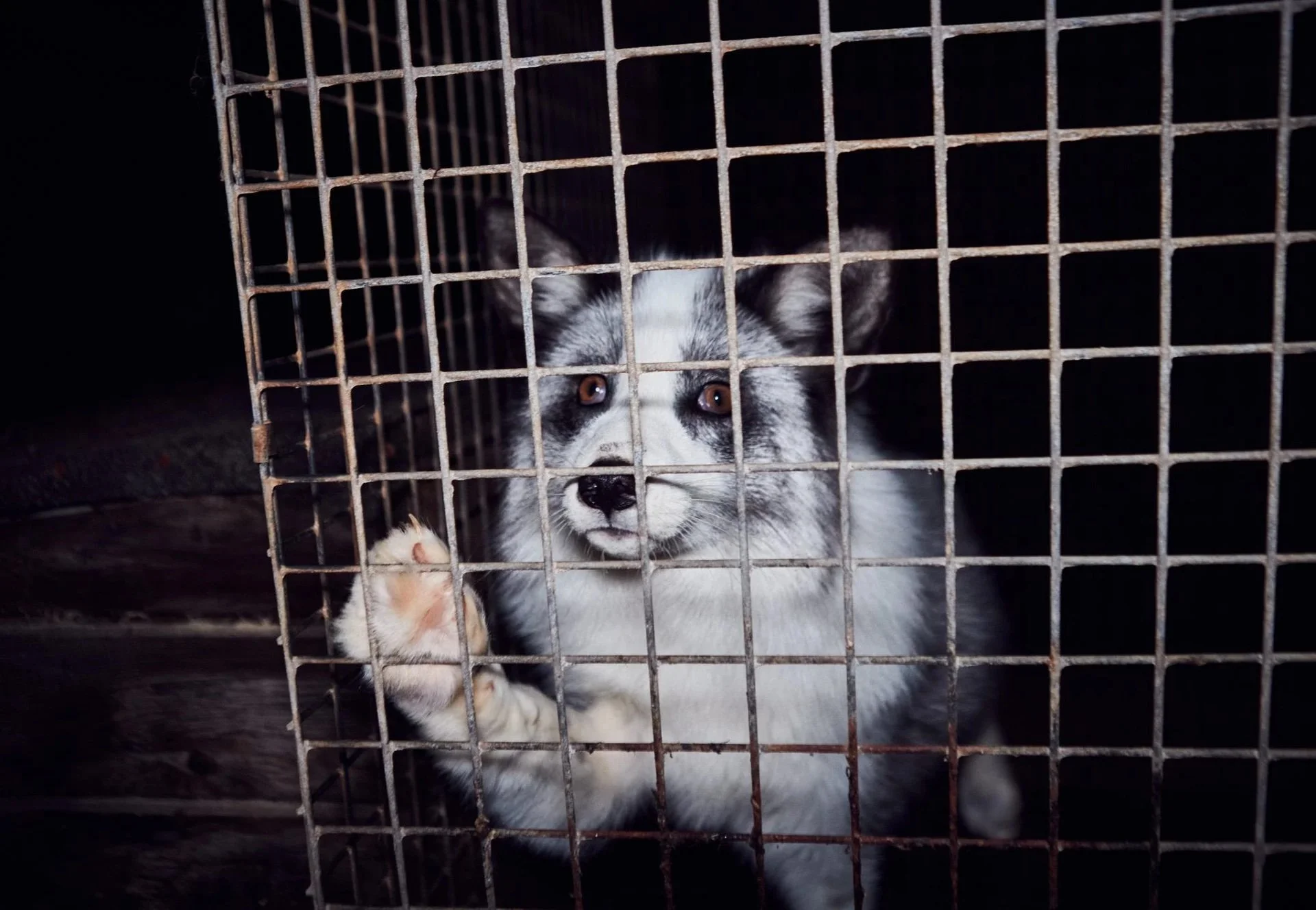
Arctic Fox / Photo credit: Four Paws
Background
House of Bruar has been the subject of controversy, having previously had to pull hamster fur coats from its shelves, with PETA criticising them for selling products made from raccoon, fox and rabbit fur.
Despite past campaign efforts, House of Bruar still sells fur in 2026. Fox, raccoon, and mink fur products are currently available to purchase on the company’s website, despite faux fur and vintage options being widely available.
The fur industry has long been the subject of scrutiny due to its unfair and inhumane treatment of animals. Animal Concern has previously campaigned against the fur trade and is now encouraging House of Bruar to cease all fur sales.
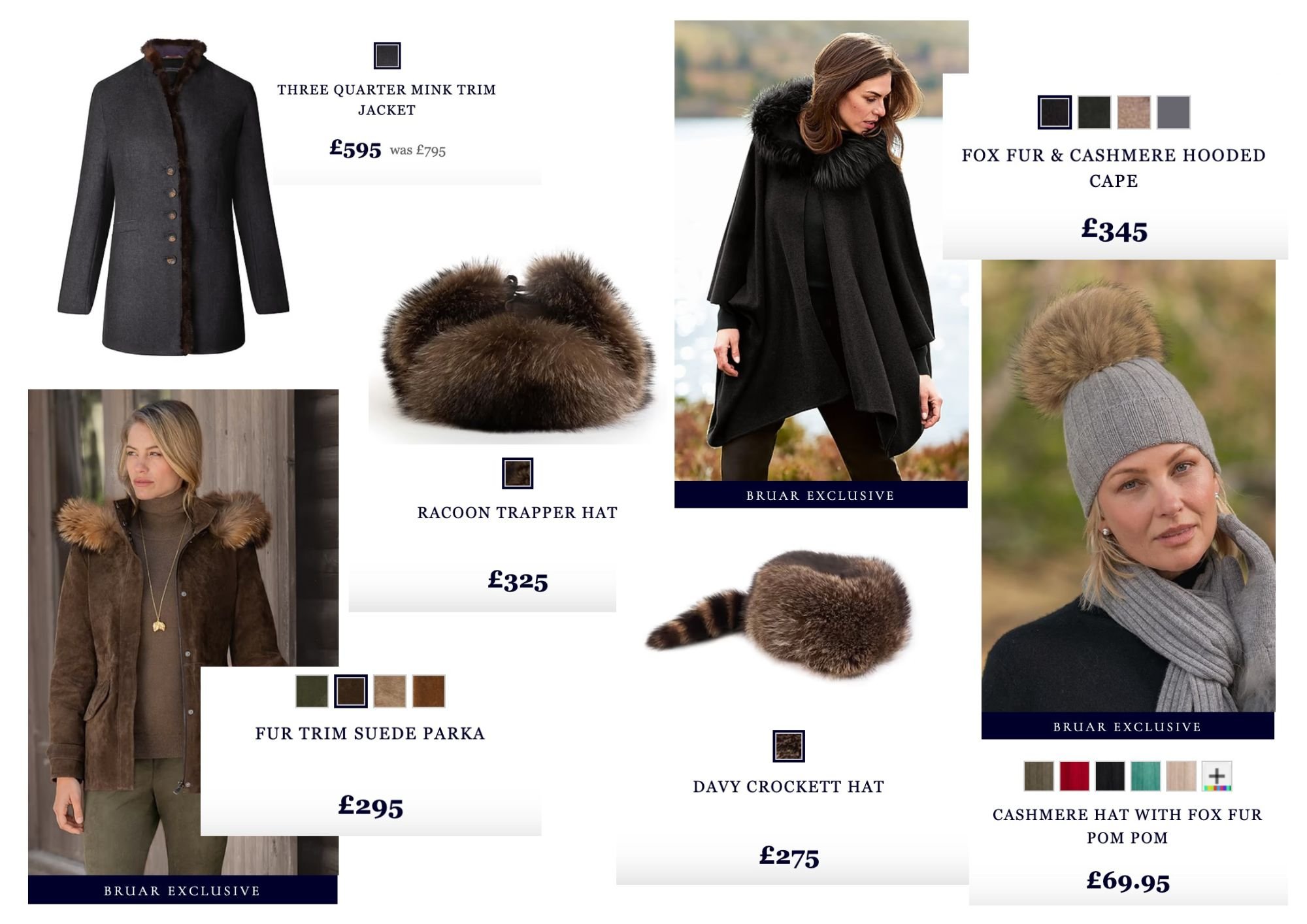
Pictured above are products available on House of Bruar’s online store
What are the laws on fur farming?
Fur Farming (Prohibition) (Scotland) Act 2002
In Scotland, “the keeping of animals solely or primarily for the value of their fur” is prohibited, making it an offence to keep and farm animals for fur and empowering courts to make forfeiture orders, forcing the person to give up the animals related to the offence, and other conditions can be attached as decided. The Act provides provisions to support the winding up of businesses carrying out fur farming in the aftermath of the it passing.
Fur Farming (Prohibition) Act 2000
In England and Wales, “the keeping of animals solely or primarily for slaughter for the value of their fur” is prohibited, making it an offence to keep and farm animals for fur and empowering courts to make forfeiture orders, forcing the person to give up the animals related to the offence, and other conditions can be attached as decided. The Act also provides provisions to support the winding up of businesses carrying out fur farming in the aftermath of the it passing.
Directive 98/58/EC
Council Directive 98/58/EC of 20 July 1998 concerning the protection of animals kept for farming purposes is in place in the UK and the EU to make sure that animals bred for their fur are treated humanely. The rules include housing, freedom of movement, feeding and watering requirements, and staff qualifications.
Directive 93/119/EC
Council Directive 93/119/EC of 22 December 1993 on the protection of animals at the time of slaughter or killing seeks to minimise the pain and suffering of animals during slaughter through the use of proper, approved stunning and killing methods, and stipulates that furs without acceptable certification should be detained.
Importing Fur
Despite the above bans being in place on fur farming in the UK, fur still gets regularly imported into the country. Imports of fur are legal in the UK, with restrictions on some skin and fur products, and imports of fur from wild animals caught using trapping methods that fail to meet international humane trapping standards are banned.
Products must be adequately labelled, clearly listing the separate material composition of the product, and products can only be imported to or re-exported from the UK from/to approved countries, all of which are listed below.
Welfare Standards on Fur Farms
Belize: raccoon
Bulgaria: wolf
Canada: coyote, wolf, beaver, bobcat, otter, lynx, marten, fisher, ermine, musk rat, raccoon, badger
Czech Republic: wolf, ermine, musk rat
El Salvador: raccoon
Greenland: wolf
Hungary: ermine, musk rat
Jordan: wolf
Lebanon: wolf
Mexico: wolf, coyote, beaver, bobcat, musk rat, raccoon, badger
Moldova: wolf, ermine
Nicaragua: raccoon
Norway: wolf, ermine, musk rat
Pakistan: wolf, ermine
Panama: raccoon
People’s Republic of China: wolf, sable, ermine, musk rat
Poland: wolf, sable, ermine, musk rat
Republic of Korea: sable, wolf
Republic of Slovenia: wolf, musk rat
Romania: wolf
Russian Federation: wolf, sable, ermine, musk rat, raccoon
Slovak Republic: wolf, ermine
Turkey: wolf
USA: coyote, wolf, beaver, bobcat, otter, lynx, marten, fisher, ermine, musk rat, raccoon, badger
Costa Rica can re-export furs from the above approved countries.
Welfare standards vary by country, although European countries tend to be governed by the same set of regulations.
According to the Animal Welfare Act 2006, Animal Health and Welfare (Scotland) Act 2006, the welfare needs of farmed animals may be categorised as: The need for a suitable environment; The need for a suitable diet; The need to be able to exhibit normal behaviour patterns; The need to be housed with, or apart from, other animals; The need to be protected from pain, suffering, injury and disease.
However, there is no guarantee these needs will be met. There is a lack of evidence to prove that these standards are met in fur farms, and welfare organisations contend that the current system does not ensure suitable standards.
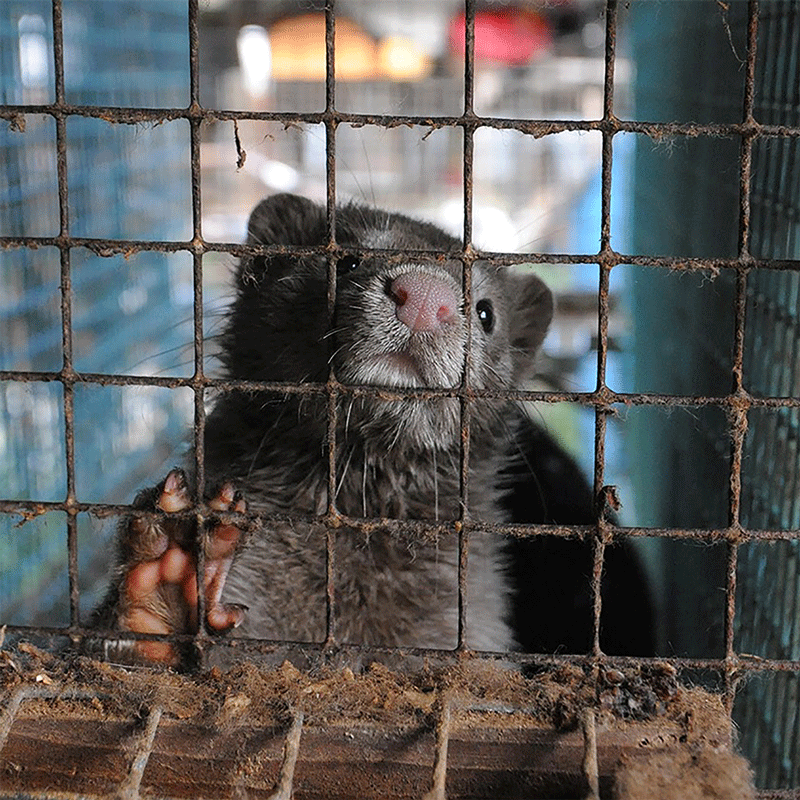
Mink / Photo credit: Euro Group for Animals
Fur is dwindling in popularity across the UK and Europe, with the value of fur imports in the EU dropping more than 60% over the last 10 years.
There is evidence that the fur industry not only causes unimaginable pain and horror to animals, but also has serious implications for the environment. Animal manure producing nitrous oxide, dressing and dyeing uses water (although there has been a move towards recycling practices to reduce waste), and wild capture of animals for fur has the potential to reduce species populations to below a sustainable level. There are also zoonotic risks, with some animals being particularly susceptible to certain viruses, eg mink and Severe Acute Respiratory Syndrome Coronavirus-2 (SARS-CoV-2). However, further research is needed to find out if there is a risk of cross-species transmission.
The Guardian published an article Ban fur farming or risk a new pandemic, outlining the horrific conditions in fur farms which are hot beds for the spread of viruses.
Additionally, the behavioural needs of carnivores are vastly different to those of herbivores, leading to incredible stress.
A recent petition by Fur Free Europe European Citizens’ Initiative, which calls for an EU-wide ban on keeping and killing animals for the sole purpose of fur production, received 1.5 million signatures. Despite this overwhelming public support for a ban, the European Commission (EC) is set to reject a ban on fur-farming, with Animal Welfare Commissioner Olivér Várhelyi expected to instead introduce tougher animal welfare standards for the fur industry. The EC appears to support “species-specific welfare rules, rather than prohibition.”
We are currently engaging in conversation with House of Bruar to support them to transition away from selling fur products.
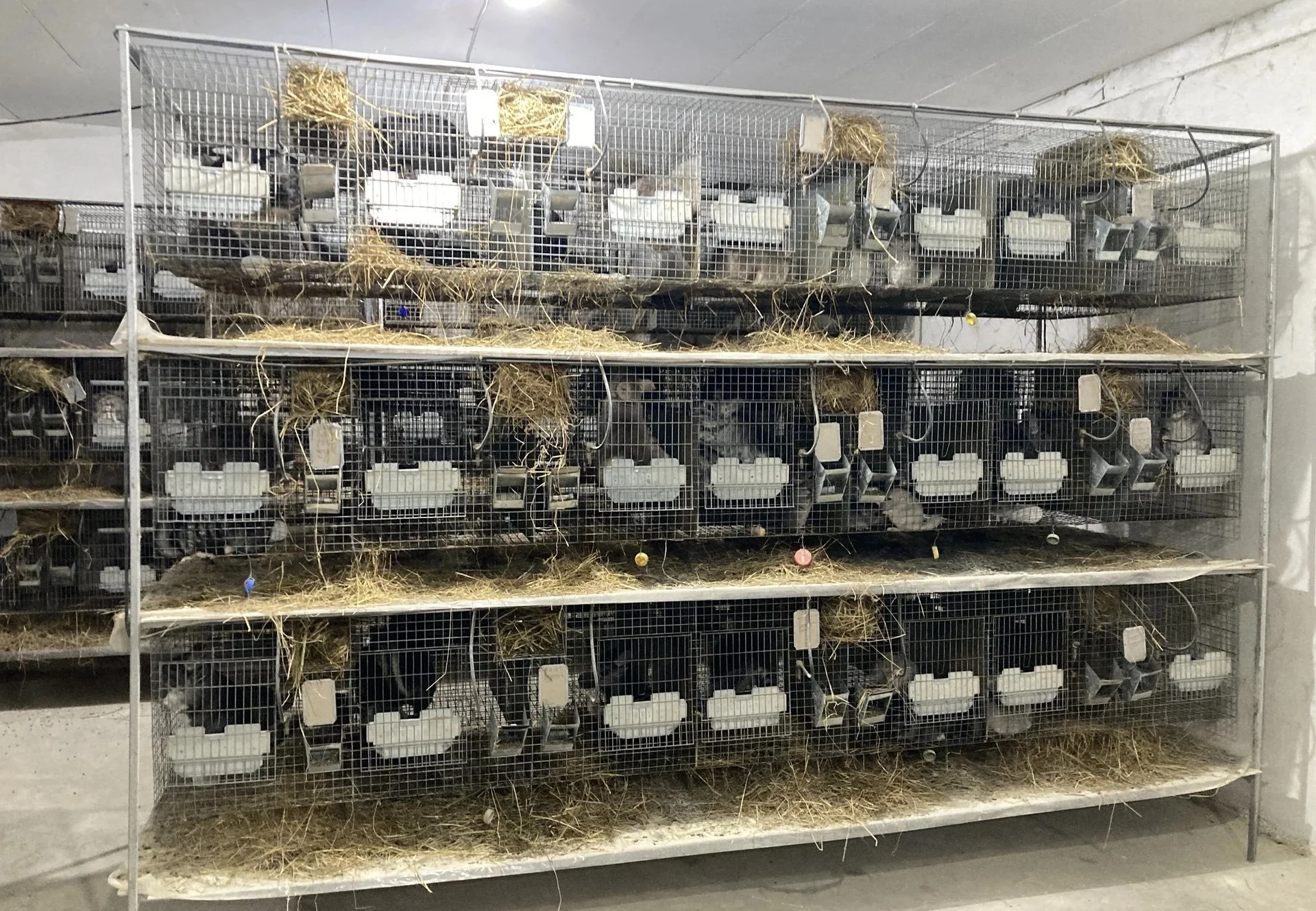
Romanian fur farm / Photo credit: Four Paws
The Current Situation
Our campaign
House of Bruar has the power to make the right decision and stop participating in the fur trade. It has the power to stop selling fur, to set an example of what making ethical and humane business decisions looks like.
We are pressing House of Bruar to do the right thing and stop selling fur products.