Help End the Guga Hunt In Scotland
On Saturday 10th of January, our campaigner Devon joined protesters at the Scottish Parliament calling for an end to the yearly mass killing event targeting seabird chicks.
Read on as she gives insight about this appalling hunt and how you can help.
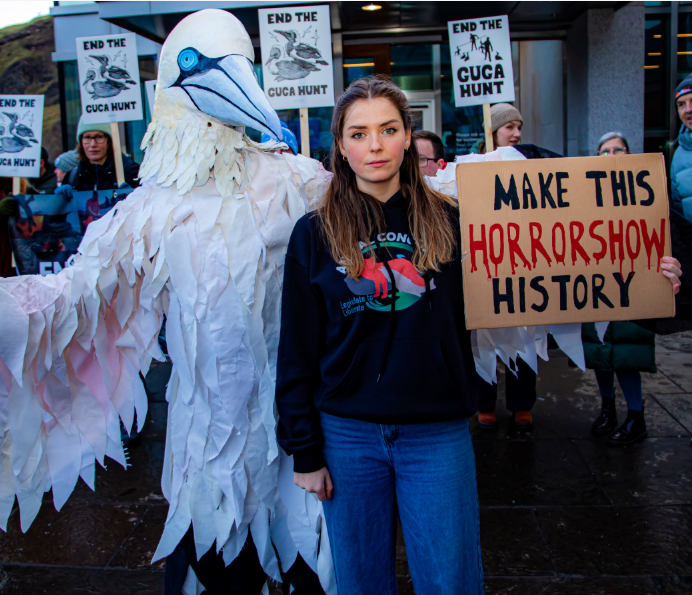
Photograph: Craig O’Donnell (@vegan_photographs_)
WHAT IS THE GUGA HUNT?
Imagine giving everything you have - enduring freezing storms, disease and hunger – to raise your one and only chick on a knife-edge of rock, just for them to be noosed, torn from the cliff, and violently killed in front of you.
That is the reality for gannets on the island of Sula Sgeir.
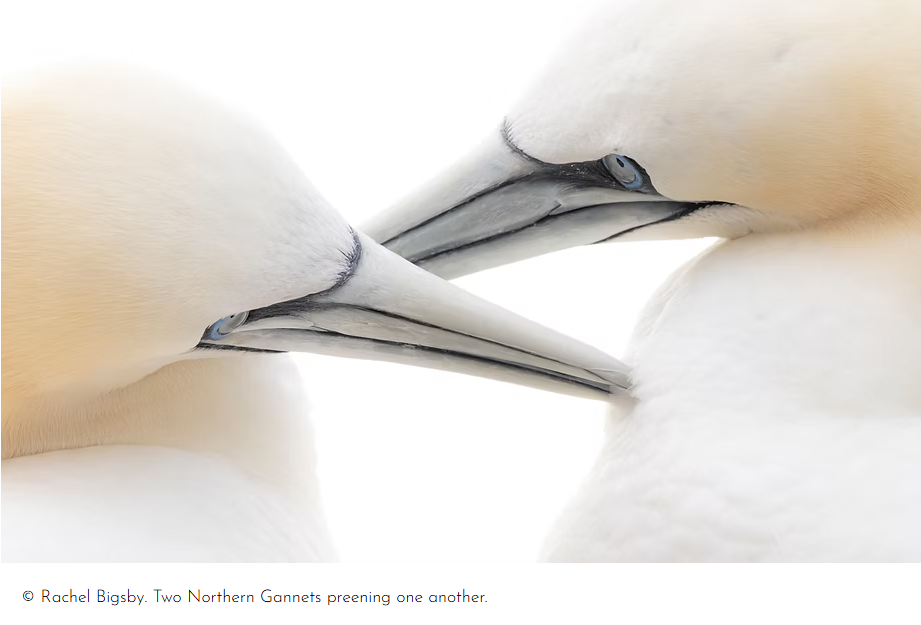
The guga hunt is a tradition where a group of men from Ness, the northernmost village on the Isle of Lewis, travel to the remote island of Sula Sgeir to capture and kill a large amount of young Northern Gannet chicks (also known as guga).
The chicks, who cannot yet fly, are captured from the cliffside with a long pole and noose, before being bludgeoned to death in front of other helpless birds. Their flesh is brought back to the Isle of Lewis where it is consumed.
This hunt is thought to be centuries old, and while it may once have been done for sustenance, there is no reason for the practise to continue. It is now done for enjoyment alone - a total and utter waste of life.
The killing of seabirds is generally outlawed under the 1981 Wildlife and Countryside Act, but this tradition has been granted an exception under section 16 of the Act. The guga hunters are granted a yearly licence from Scotland’s national nature agency, NatureScot. 2025 is the first year the hunt was granted a license since 2021.
Gannets already struggle immensely from the devastating impacts of bird flu, overfishing and climate change. Don’t you think they’ve suffered enough at the hands of humans without also having their babies beaten to death for fun? We certainly do.
Scotland is one of the most nature depleted countries in the world, yet we are lucky to be home to over half of the world’s gannet population. Sula Sgeir – which translates to “Gannet Island” – is a very important nesting site for them and should be their sanctuary, not their slaughterhouse.

HOW CAN IT BE STOPPED?
There are two main routes to ending the guga hunt. The first, and best, would be for the Scottish Government to amend Section 16 of the Wildlife and Countryside Act 1981 to remove the power to grant licences for taking gannets on Sula Sgeir, which they have already said they are not planning to do – but increased public outcry, pressure and lobbying could make them reconsider.
The second is for NatureScot, which administers wildlife licences in Scotland, to refuse to issue any new licences for gannet taking, however, they have said the only reason they could deny the licence would be if it threatened the conservation status of the species. But with sustained public pressure, expert input, and ethical scrutiny, NatureScot could - and should - reconsider issuing the licences. This is an opportunity for NatureScot to stop being hypocrites and live up to their claims of working “to improve our natural environment in Scotland and inspire everyone to care more about it.”
WHAT CAN YOU DO TO HELP?
There is currently a petition to stop the guga hunt. At the time of writing it has received over 25,000 signatures and is on track to become the most signed petition in the platform’s history.
Please sign and share the petition to Stop the Guga Hunt today.
Additionally, you can join protests. The next one will be on Wednesday, January 21st at 8.30-10.30am outside of the Scottish Parliament, when the Petitions committee will be meeting to discuss the petition. This is a crucial time to make public opposition to the guga hunt visible, so please show up if you can.