
Take Action: Consultation on proposed ban for keeping hens in cages
On the 12th of January, the UK Government launched a consultation into reforming the law on cages to ban keeping hens in cages.
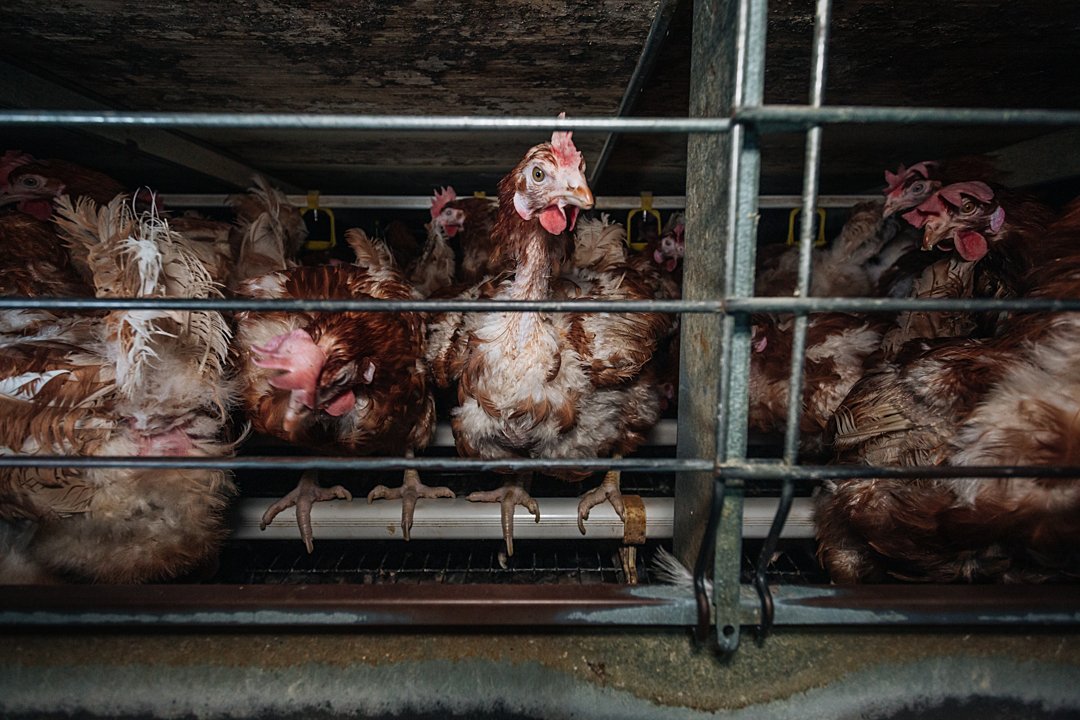
Hens in ‘enriched colony’ cages have just 9% more room than battery cages, making them marginally better than battery cages. (Photo from We Animals.)
The Department for Environment, Food & Rural Affairs (Defra) launched the consultation, “proposing to phase out the use of ‘enriched colony’ cages for laying hens and any other caged systems used for pullets and breeder layers, and ban the remaining use of conventional ‘battery’ cages for keepers with fewer than 350 birds.”
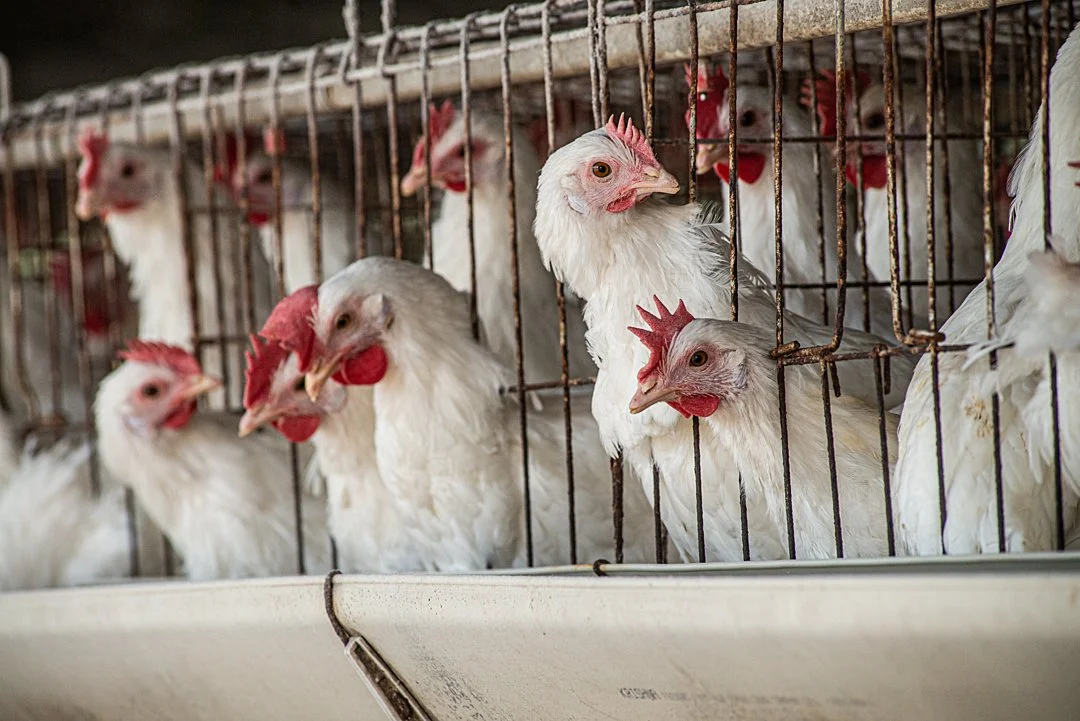
Hens in a ‘battery’ cage, where they are confined to being unable to move around.
(Photo from We Animals.)
The move, which could ban ‘enriched colony’ cages by 2032, has been criticised by farming organisations, with the British Egg Industry Council pointing out that the Government is not intending to put equivalent bans on imported shell eggs, egg products, and finished goods containing eggs, and that the ban on cages would provide little welfare gains for hens. The National Farmers’ Union (NFU) denounced the move as it would remove “an affordable and nutritious source of protein to a growing population”.
It is unsurprising that the farming industry opposes these proposals, as they prioritise profit over animal welfare. The more hens they can cram into cages, the more “production” they get. The NFU’s arguments, detailed above, do not stand up, as the proposals are not to ban the production of eggs entirely, but to stop hens being cruelly confined in cages. Additionally, there are many affordable and nutritious sources of protein that don’t come from animals, such as tofu, tempeh, beans and other legumes, nuts, seeds, and soy milk. Animals need not be subject to lifelong cruelty to produce protein.
In 1999, an EU Directive banned unenriched battery cages for laying hens for keepers with 350 or more birds and the ban took full effect in January 2012. This left a significant gap, and keepers with less than 350 laying hens are able to continue using the cages, with ‘enriched colony’ cages an option they can reject.
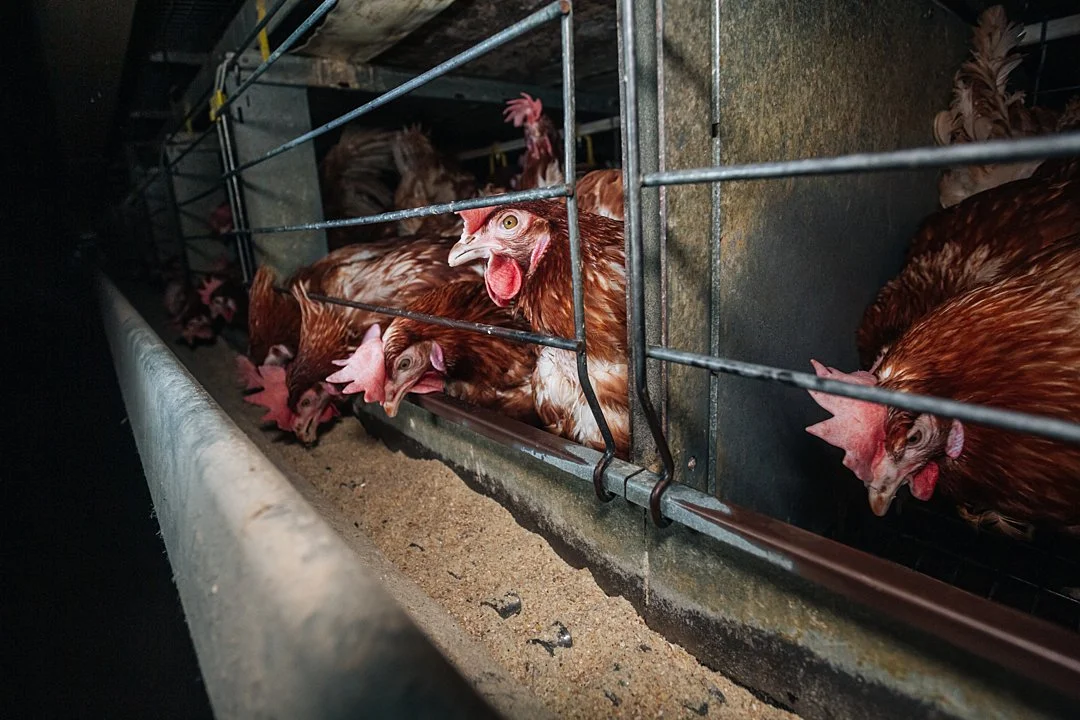
Hens in an ‘enriched colony’ cage. (Photo from We Animals.)
Enriched ‘colony’ cages restrict the physical and behavioural needs of hens, preventing access to the ground and other levels, as well as limiting their ability to run, use their wings, dustbathe, or forage.
Now, Defra is giving the public across the UK the opportunity to give their views on proposed amendments to the Welfare of Farmed Animals (England) Regulations 2007 and the Welsh, Scottish and Northern Irish equivalents, which would:
Ban building or bringing into operation for the first time any enriched colony cage system for laying hens from 2027, including for keepers with less than 350 birds, and any other caged systems used for pullets and breeder layers;
Ban the use of existing conventional ‘battery’ cages for laying hens with fewer than 350 birds from 2026;
Ban the use of existing enriched colony cages for all scale of production, including any other caged systems used for pullets and breeder layers by 2032.
The public can respond to the consultation up until its deadline on the 9th of March 2026. Give your views now to let Defra know that you don’t support the inhumane practice of keeping hens in cages. The Humane League have devised a tool to assist with filling out the consultation.