
The Fight Against Fireworks: Latest Updates.
Animal Concern has long been campaigning for a ban on the public sale of fireworks and other restrictions on fireworks. For too long, the reckless use of these explosives has terrorised and killed our companion animals, farmed animals and wildlife, as well as harming vulnerable people.
We thought now would be a good time to bring you up to date on where things currently stand with this campaign and what comes next.
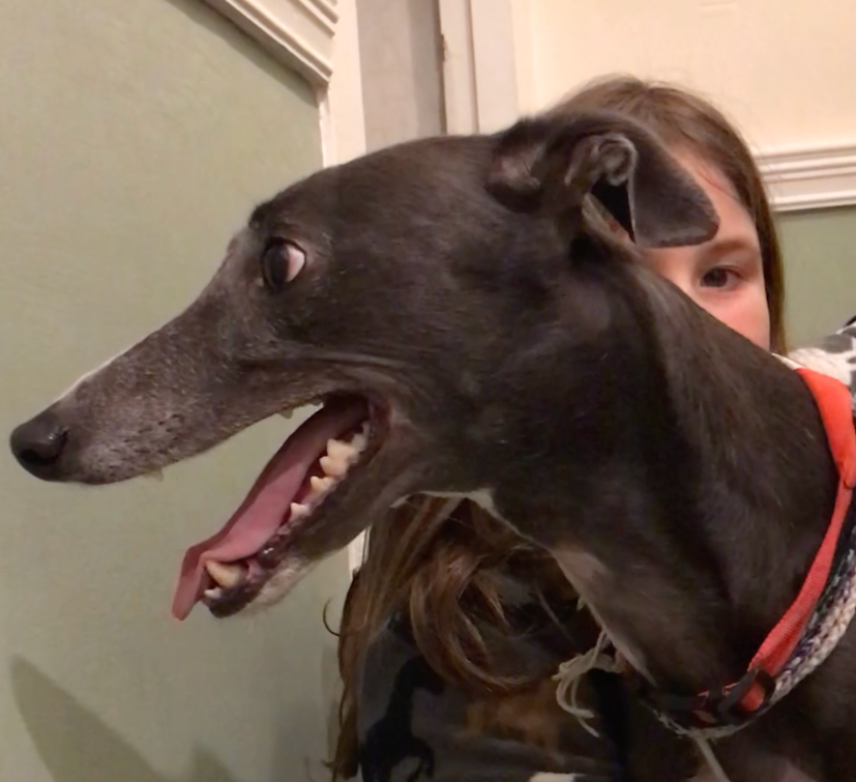
Sylvie, our executive director’s greyhound, hyperventilating due to fireworks.
THE WESTMINSTER DEBATE
Recently, two petitions - to ban the public sale of fireworks, and to reduce their maximum allowed noise levels – received well over the needed 100,000 signatures to trigger a debate in the UK parliament.
That debate happened on 19th January, and - we’re glad to say - showed the huge strength of feeling on this issue. MPs from all parties and parts of the country showed up to highlight how their constituents had been impacted, sharing accounts of house fires, people being burned when fireworks were thrown at them, a foal succumbing to fear driven injuries, a pregnant cow dying and companion animals and veterans suffering panic attacks. Also noted was the very important yet not well documented impact on wildlife.
The debating hall was packed full and discussions lasted for three hours. MPs were almost fully agreed that a reduction on maximum allowed decibels was needed, while the premise of banning the public sale received more mixed support.
This is disappointing, given that the Netherlands just became the latest country to ban the public sale of fireworks - joining the likes of Ireland and Chile - and demonstrating that nationwide bans are not only achievable but already working elsewhere. Fireworks are dangerous explosives, and it’s just common sense that only licensed professionals should be trusted to use them safely.
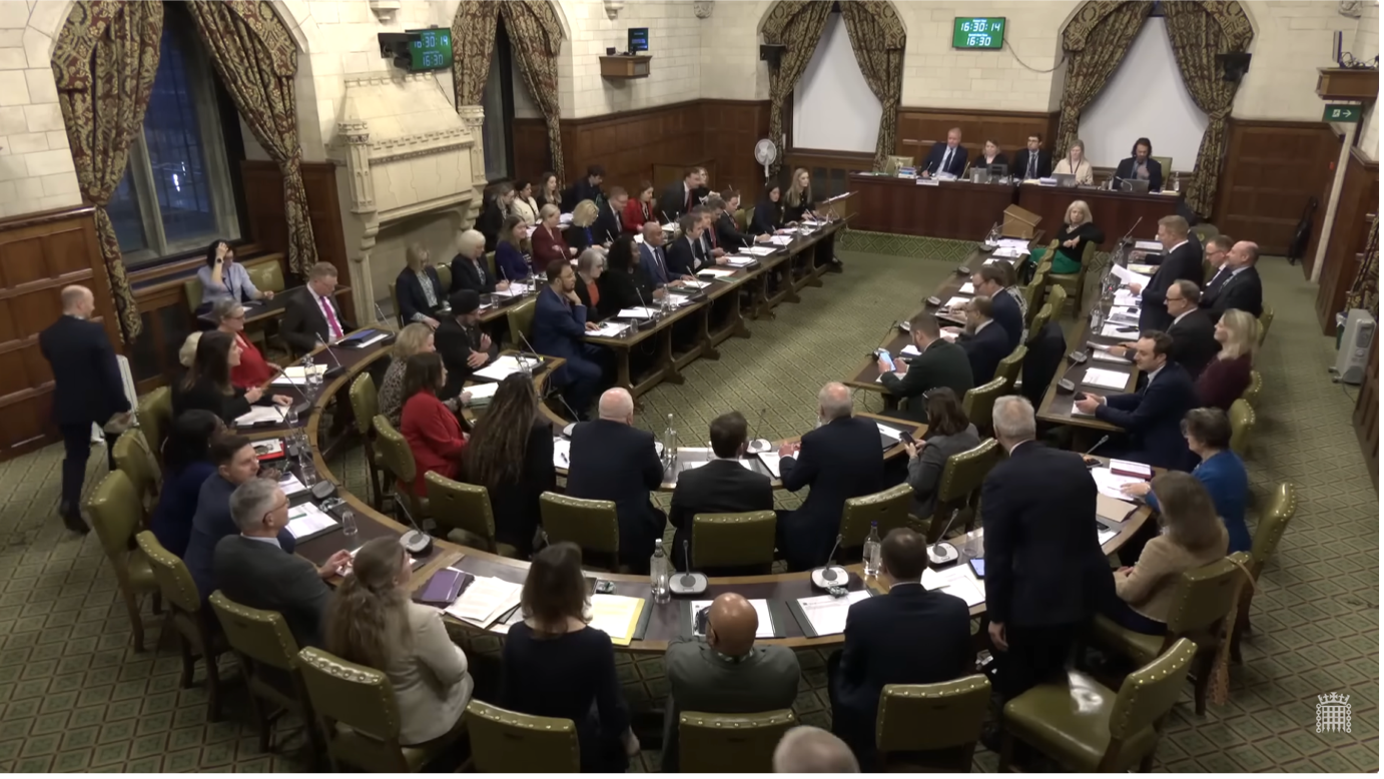
The debating chamber was packed full for the debate, highlighting the strong attention this issue is receiving from MPs.
Halifax MP Kate Dearden was sent to respond to the debate as part of her role as under secretary for the Department for Business and Trade. She was as non-committal as one would expect, saying she was "not able to provide a timescale” but “We will consider the effectiveness that further legislation may have in reducing antisocial and illegal firework use, and I will continue to build on that.”
She added “I am always happy to meet the leads of the petition, campaigners and colleagues in this House to update them and provide the opportunity for them to feed back directly to the Department and me, so they do not have to wait for another Westminster Hall debate.”
This should be taken as a clear signal to keep pressing the issue - and to do so directly with those at the top; contacting ministers directly, urging MPs to raise the issue in Parliament, and making clear that we want a clear timeline for implementing stronger legislation. The debate made one thing unmistakably clear: personal stories matter. MPs relied heavily on real experiences from their constituents to make the case for change. So when you contact politicians, tell them how you and your family have been personally impacted - and be clear that words are not enough without a timeline for action.
BROKEN PROMISES AS SCOTLAND STILL WAITING FOR LICENSING SYSTEM
Notably, during the debate several MPs urged caution in following the Scottish government’s approach, which although was an improvement, is still ultimately proving to be ineffective. In 2022, the Firework & Pyrotechnic Articles (Scotland) Act was introduced, allowing local authorities to designate Firework Control Zones (FCZ) in which use of fireworks can be outlawed.
Patricia Ferguson, Labour MP for Glasgow West, said she was frustrated that a bid for a FCZ in her constituency was rejected. She also argued that, more broadly, control zones are often ineffective, difficult to enforce, and have failed to reduce firework-related incidents in Glasgow.
The 2022 Act also approved a licensing system, allowing councils to require residents to obtain a permit to use fireworks, effectively banning public sale in that area. But that scheme has been put on pause, the government complaining about the cost and complexity of issuing said licenses. To that we say - simply not good enough.
But don’t just take our word for it. After a violent, firework-wielding mob wreaked havoc on Dalmuir’s streets, West Dunbartonshire Council stressed the pressing need to stop the public sale of fireworks in their area to prevent further dangers to public safety and wellbeing.
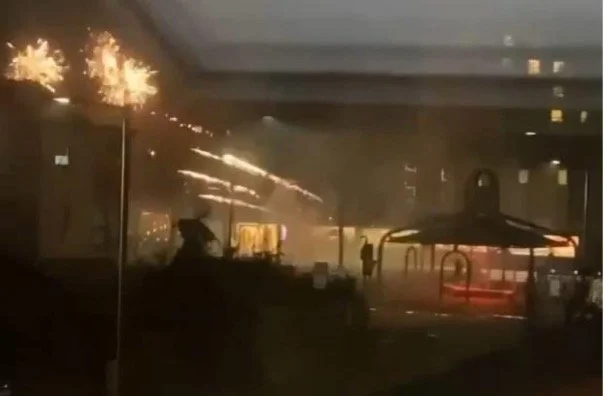
Scenes from Dumbarton Road on Bonfire Night 2025. Photograph: Clydebank Post.
David McBride, deputy council leader said: "The failure to deliver promised legislative protections has left communities exposed. We need robust national regulation, including mandatory licensing, restricted sales, and enforceable usage windows."
We wholeheartedly agree, and Animal Concern has contacted West Dunbartonshire Council to see how we can support their efforts and help advocate for the full implementation of the licensing provisions. We’d like to see more local councils speaking up on the ineffectiveness of current laws to tackle firework harm and demanding the government make implementing the licensing scheme a priority. We’ll continue reaching out to councils, and we encourage you to do the same in your own community. You can write directly to government departments like the Department for Business and Trade, and request meetings with local councillors, your MP and MSPs. To reiterate, when contacting these representatives, you should:
Provide personal evidence – Explain how fireworks have impacted you, your family, companion animals, local wildlife and farmed animals, and vulnerable community members. Personal experiences make the issue real and urgent.
Attach supporting media – Attach images or videos to illustrate the problem clearly. This could include, for example, images of property damage, or videos of terrified companion animals.
Demand for a clear timeline – Ask councils to advocate for stronger legislation and for governments to set a concrete timeline for
a) fully implementing the licensing scheme in Scotland.
b) introducing stronger firework legislation throughout the UK.Push for updates and accountability – Request regular updates on what actions have been taken following meetings and correspondence.
For those who have not experienced the negative and horrifying impacts of fireworks, it is perhaps difficult to understand that banning public use of fireworks is nothing to do with being “fun killers”, but about protecting animals from being killed and terrorised.
With each year that passes, the message is getting stronger that “fun” and celebrations should not cause injury, trauma, and death to any living being.