
The UK Government’s strategy to phase out animal testing does not do enough
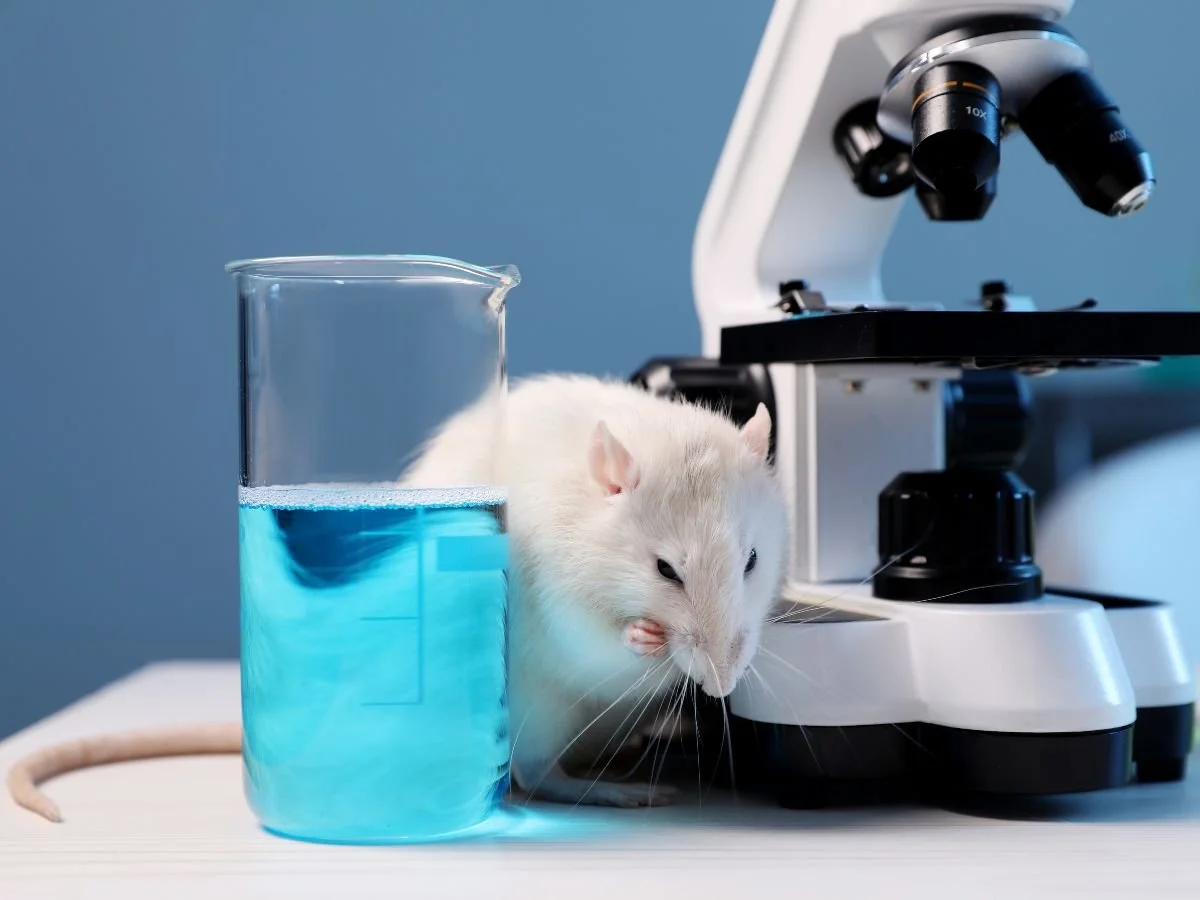
The Government’s recently published ‘Replacing Animals in Science strategy’, announced in November 2025, sets out plans to phase out animal testing in the UK. The strategy introduced a roadmap for alternative methods, developed by the Government, in consultation with life science experts, businesses and animal welfare organisations.
The plan includes a pledge of £75 million of funding to research into new methods to replace testing on animals. Such methods include:
Organ-on-a-chip systems, devices that mimic the functions of human organs using real human cells.
Use of AI to analyse large amounts of data about molecules to predict whether new medicines will be safe and work sufficiently on humans.
3D bioprinted tissue used as realistic tissue samples to study human biology and to check the toxicity of substances.
While this strategy is a slight improvement, it still fails animals.
The Home Office reported that 2.6 million tests were conducted on animals in British laboratories in 2024, with 1.2 million of these carried out for the creation and breeding of genetically altered animals, 48 thousand assessed as ‘severe’, 16 thousand carried out on specially protected species (cats, dogs, horses, and monkeys), and almost 12 thousand LD50 procedures were carried out. LD50 (‘lethal dose 50’) experiments involve giving live animals increasing doses of a substance until half of them die, in order to inform scientists of a substance’s lethal dose.
Furthermore, the statistics released by the Home Office show a 289% increase in the use of cats in animal testing compared to 2023 statistics. This is a shocking fact, especially considering the fact that cats are protected species under The Animals (Scientific Procedures) Act 1986, meaning that they should only be used in tests if other species cannot be.
Animal Free Research has rightfully pointed out that the strategy does not contain “a clear timeline, firm targets or binding legislation” which could stifle progress. In the absence of specific deadlines and laws to underpin the strategy, it risks becoming a mere symbolic commitment to the phasing out of animal testing that does not achieve meaningful change in practice.
The Government must commit to comprehensive plans to put restrictions on and replace animal testing with viable alternatives. A new strategy should include, but not be limited to, proposals for binding laws and/or regulations, more investment in the development of alternatives to testing, and clear objectives to allow for sufficient monitoring and accountability.
Having reached over 100,000 signatures, a petition to the UK Government, titled ‘End testing on dogs and other animals for development of products for human use’ shows that there is no longer widespread public support for the use of animals in testing. ADD YOUR NAME TO THE PETITION to have your voice heard regarding the unfair and cruel practice of animal testing.