Shocking new evidence shows cruel animal toxicity testing in the UK
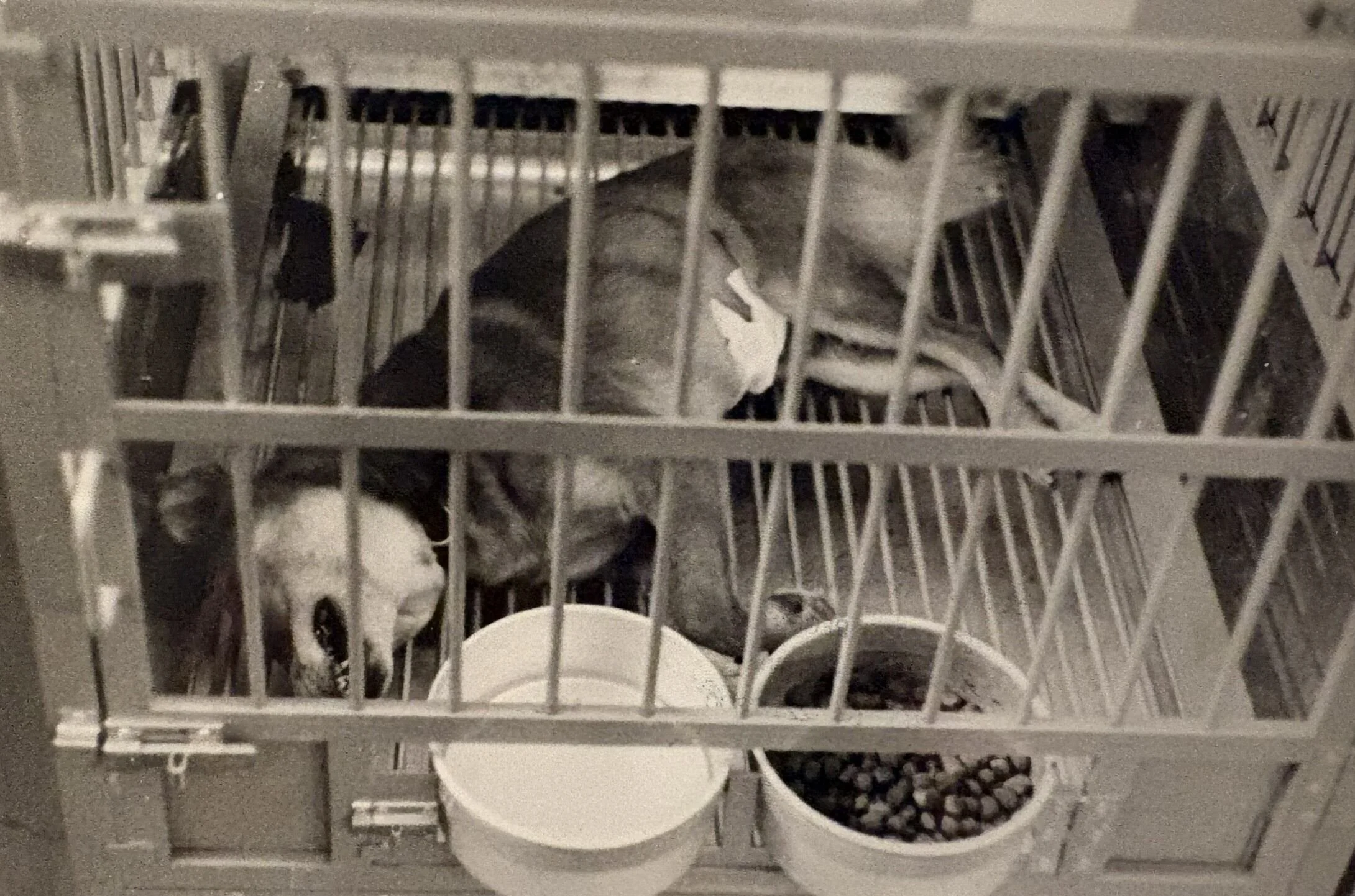
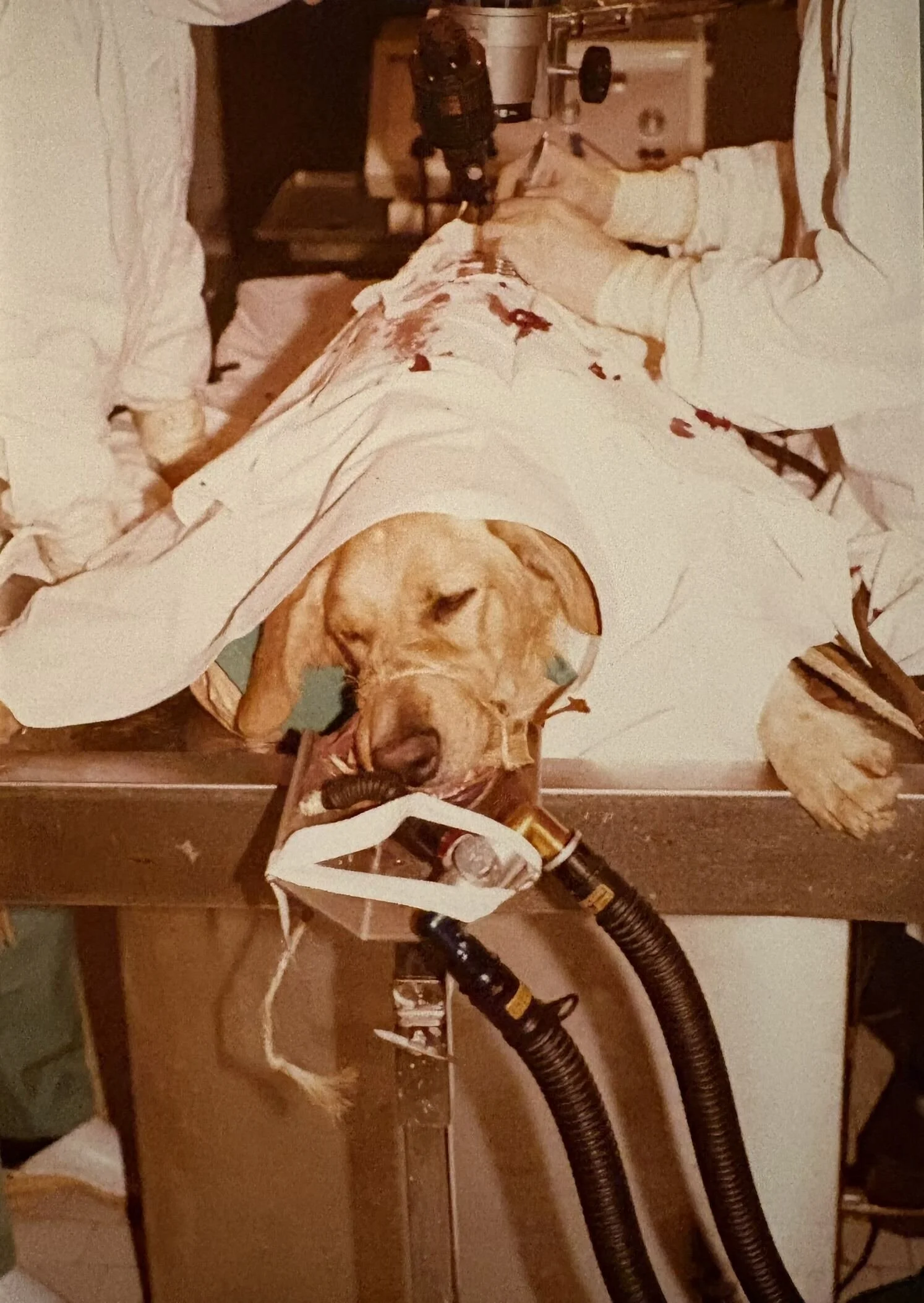
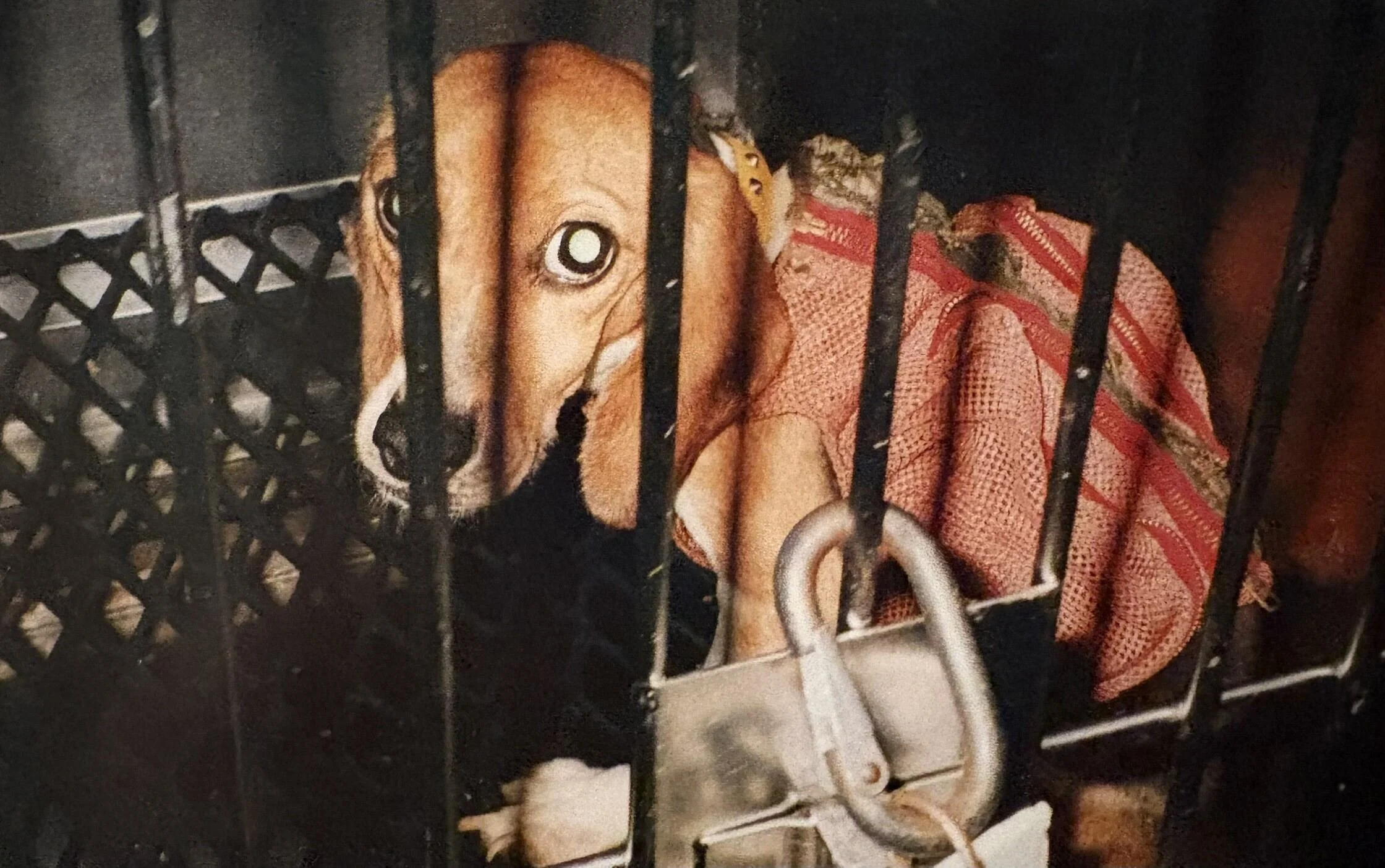
This month, many of us were confronted with the harrowing scenes of animal toxicity testing in the UK. The images and footage has been picked up across the world, reaching as far as Australia, and leaving many, understandably, shocked and upset at what they have seen.
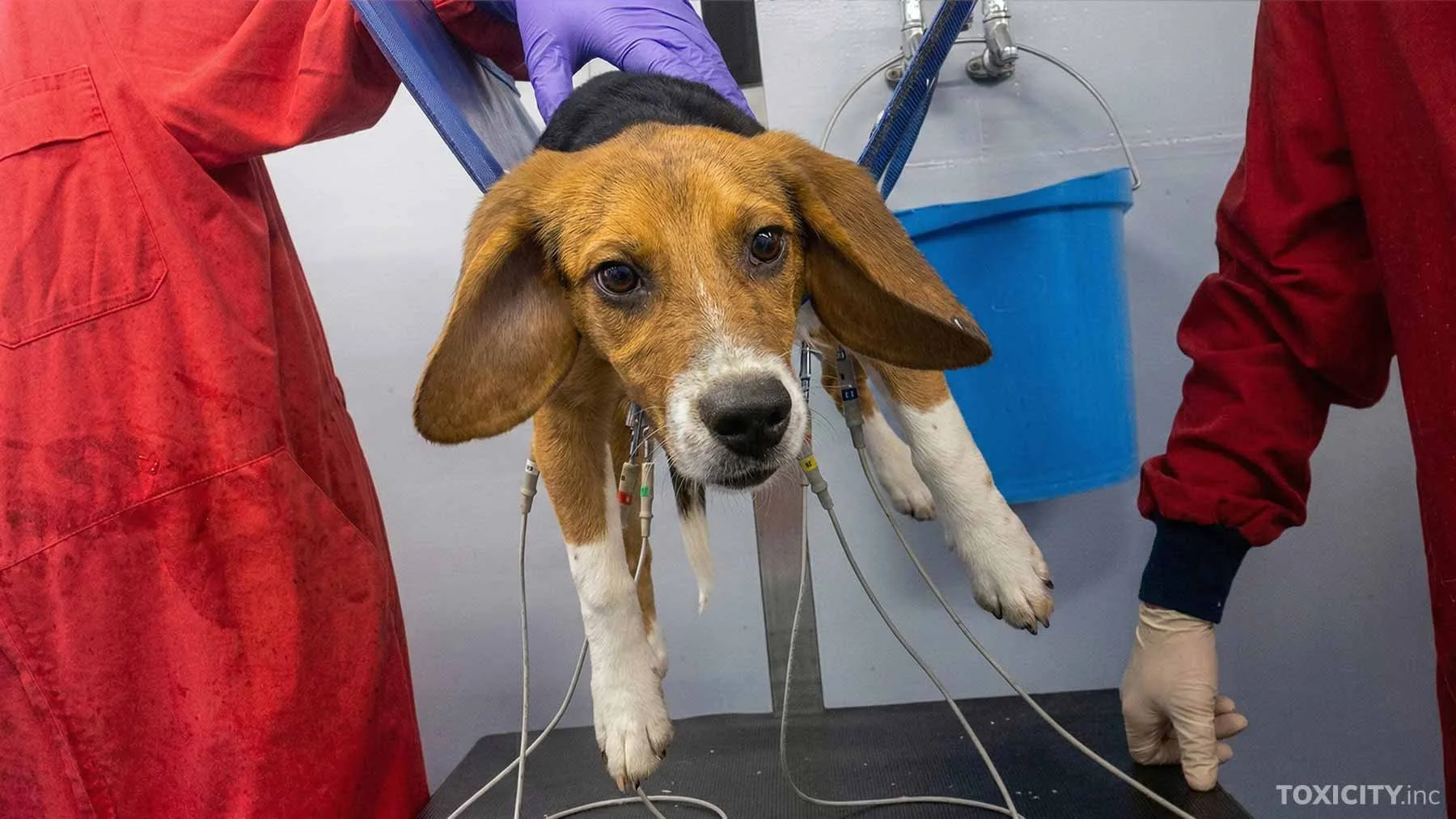
Photo from TOXICITY.inc
New Evidence
As part of their campaign to end animal toxicity testing, called TOXICITY.inc, Animals International and Animal Aid recently published the extensive evidence, consisting of photos and videos exposing animal toxicity testing in UK laboratories. The exposé uncovers the cruelty which happens behind closed doors, for the first time in 10 years.
The evidence was gathered by a former lab worker across two testing plants, and involves the suffering of dogs, primates, rabbits, pigs, and rodents. He said that the scenes he witnessed deeply traumatised him and he believes that the UK public have a right to know and be informed on what is happening inside UK laboratories.
Toxicity testing is authorised by the Home Office and carried out on hundreds of thousands animals a year in the UK alone, and used to test pharmaceutical drugs, industrial chemicals, pesticides, biocides and substances added to food or feed products, with most of these tests being carried out to fulfil EU law requirements.
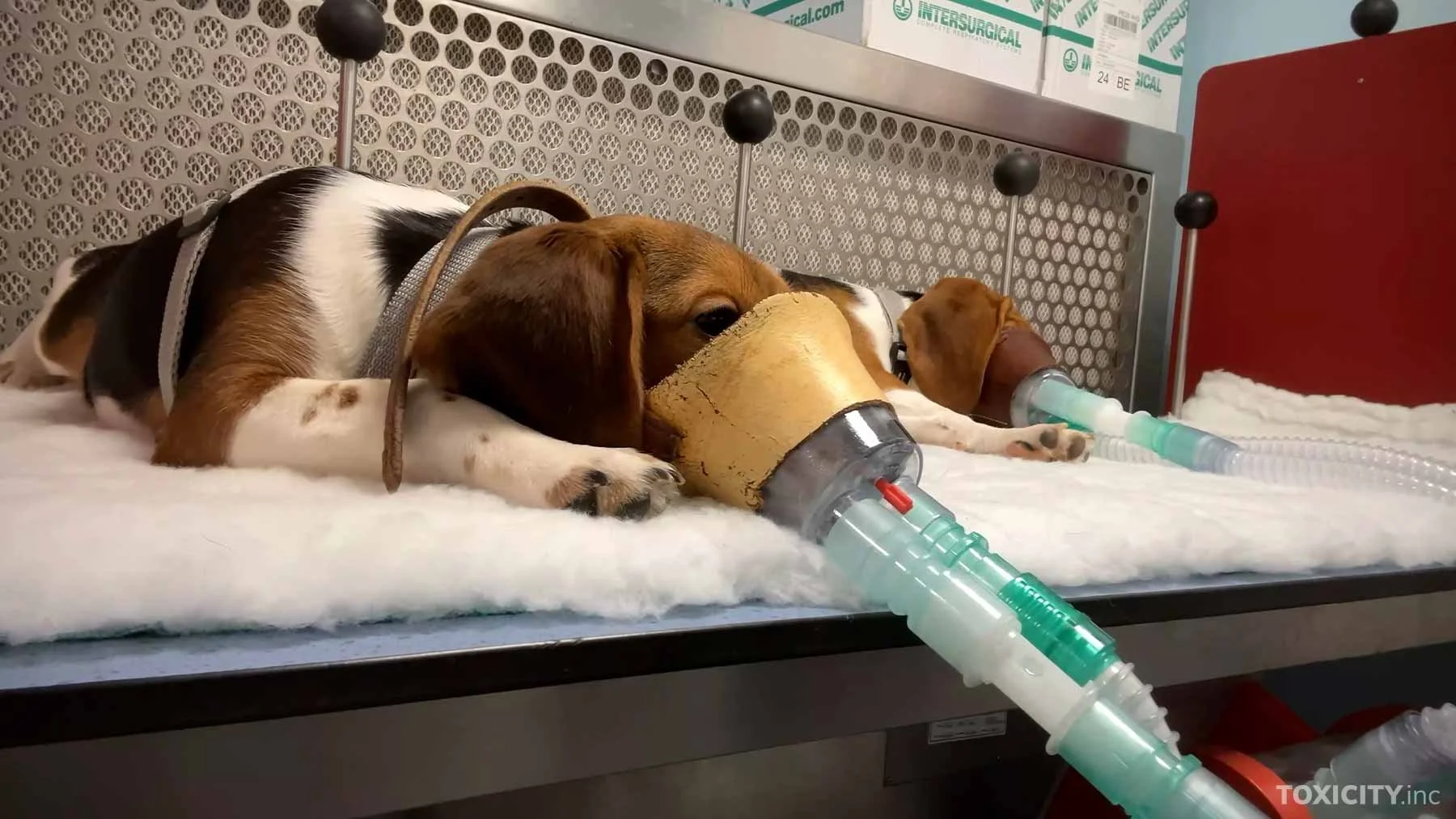
Photo from TOXICITY.inc
The footage documents beagles which are tethered and fitted with masks and forced to ingest chemicals. Beagles are the main dog breed used in animal testing in the UK, due to their gentle and docile manner. In 2024, 2646 regulated experiments were carried out on dogs in the UK, with 2488 of those tests involving beagles, and 1549 beagles were bred specifically for testing. One CFI investigation, carried out in 2013, found that puppies as young as 5 weeks old were being killed within a laboratory researching into veterinary medicines.
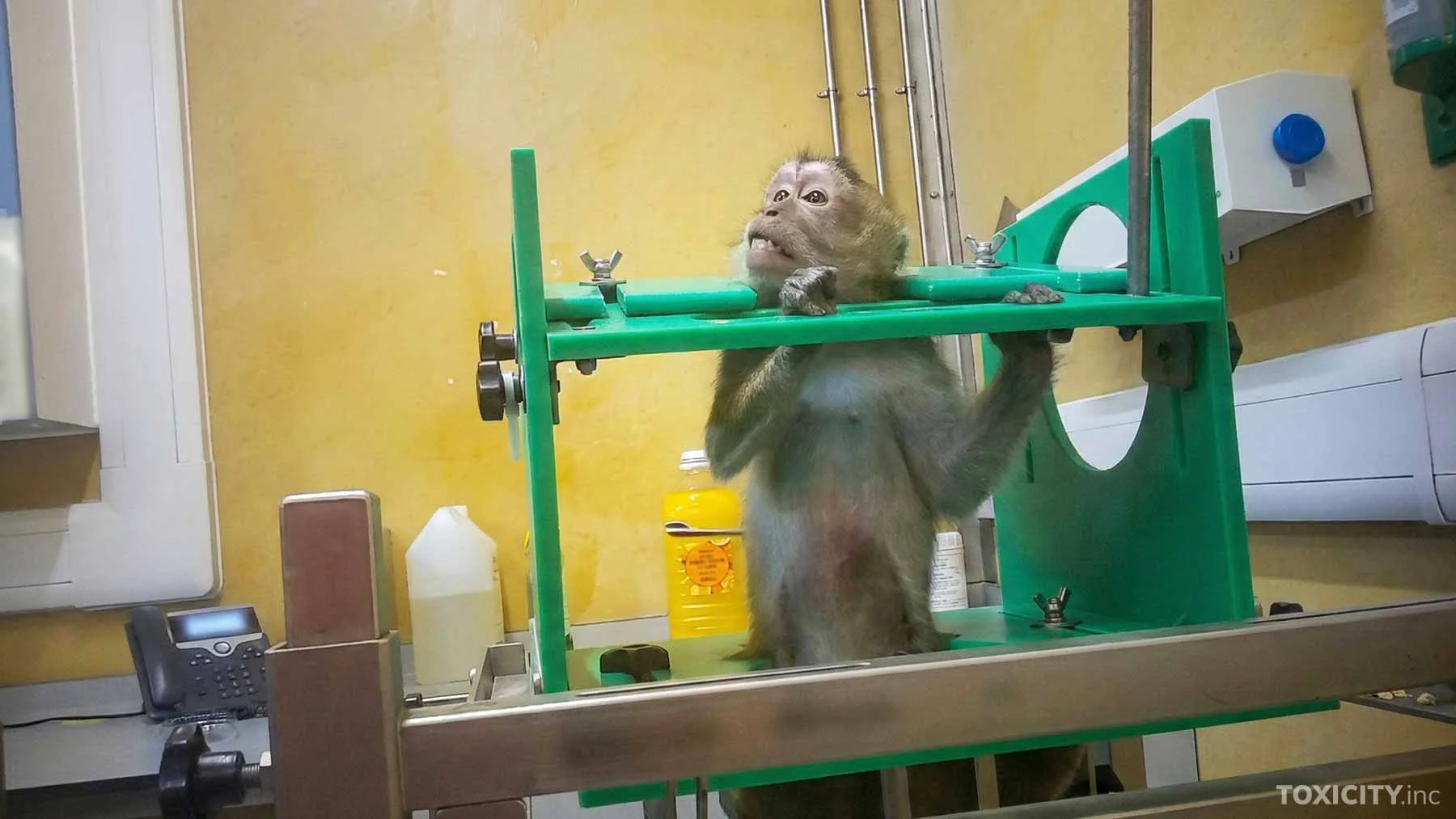
Photo from TOXICITY.inc
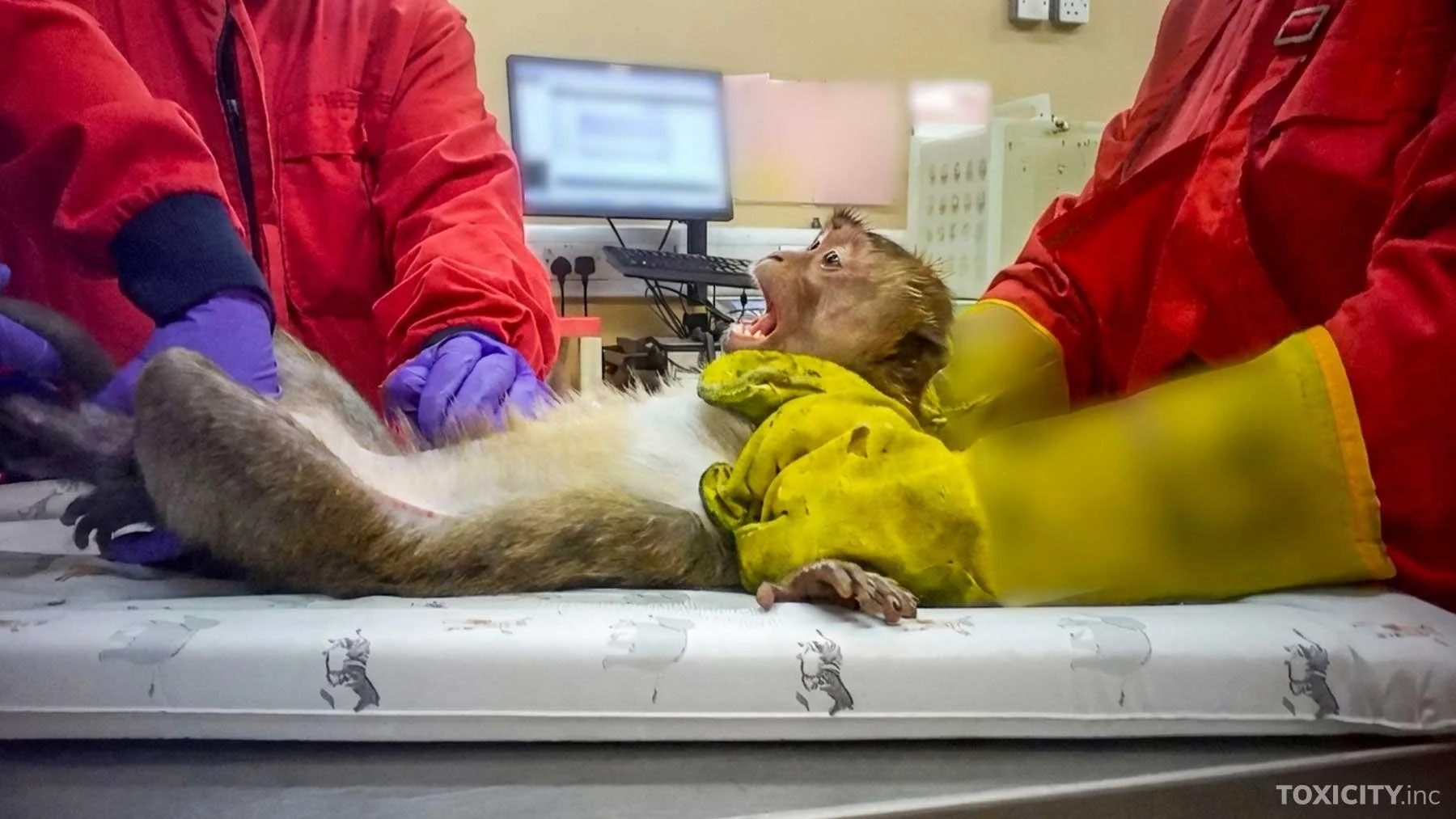
Photo from TOXICITY.inc
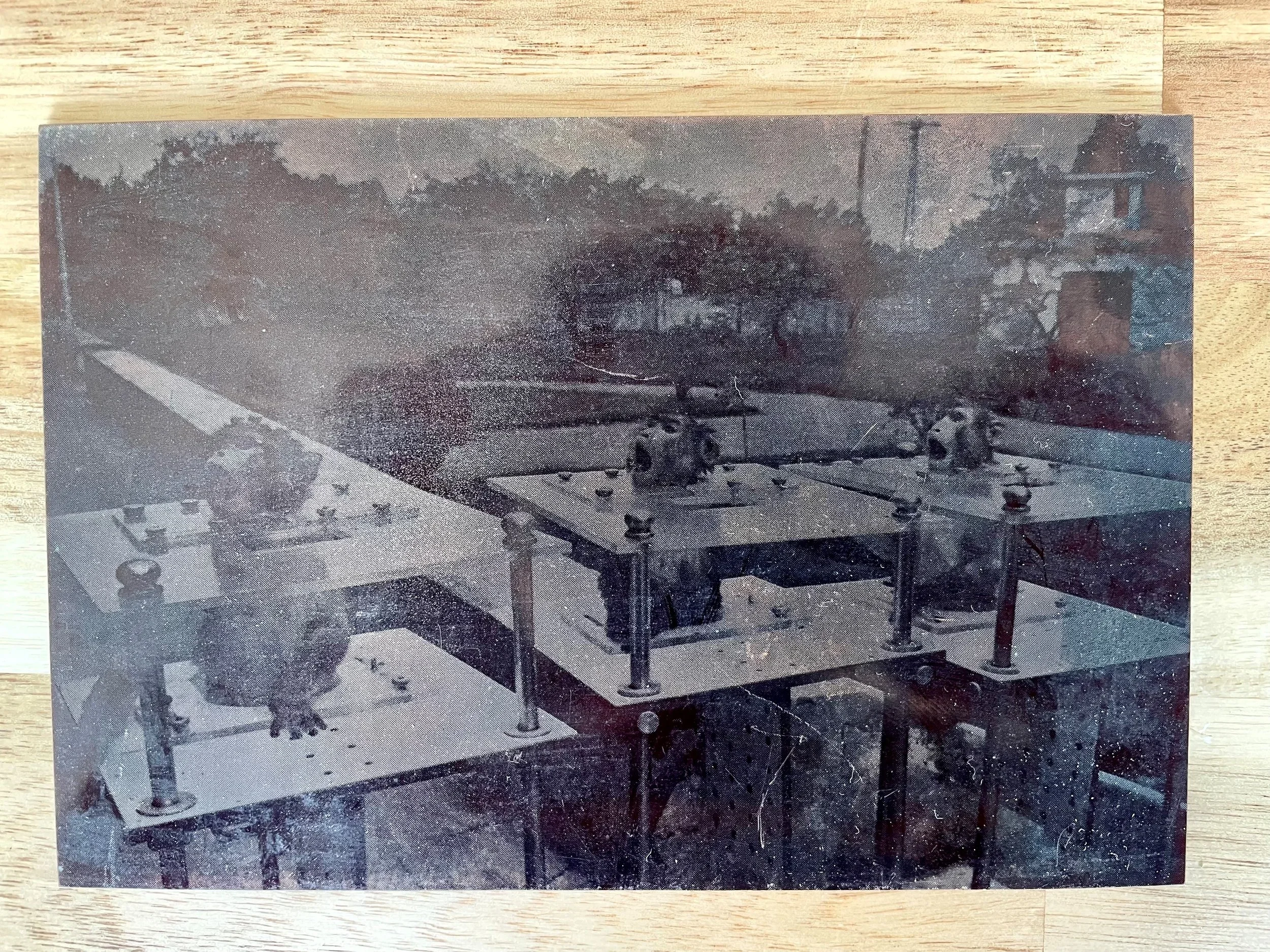
Other scenes exposed include primates, which are imported from Southeast Asia and Mauritius, confined in cages, regularly restrained, and suffering from extreme stress on a daily basis before being killed after testing has concluded.
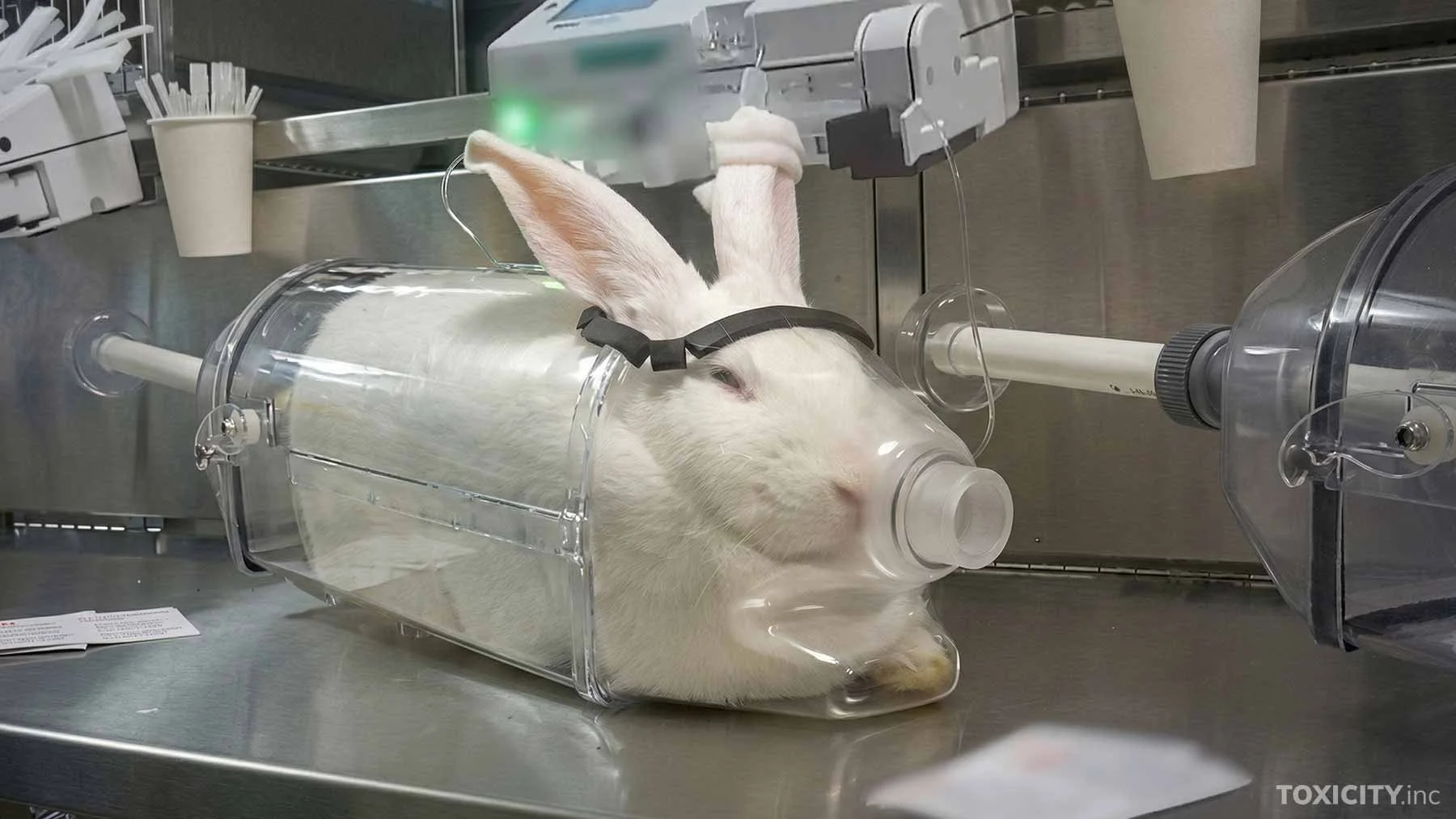
Photo from TOXICITY.inc
Rabbits are immobilised in plastic containers, and have tubes forced into their mouth and through their oesophagus during testing.
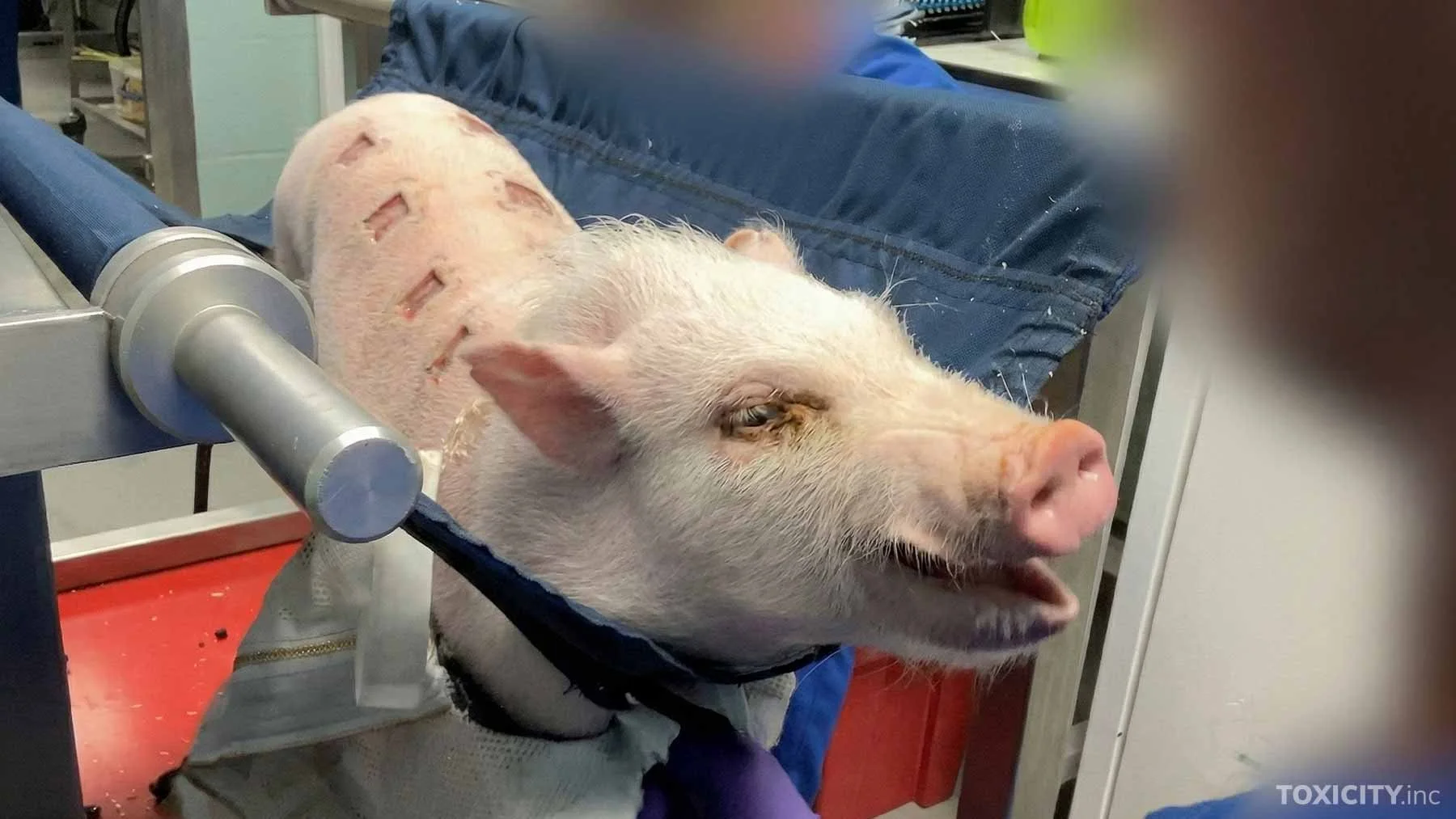
Photo from TOXICITY.inc
Mini-pigs are used to carry out dermal toxicity testing, which involves rectangles of skin and flesh being surgically cut out of the pigs’ backs to apply test substances.
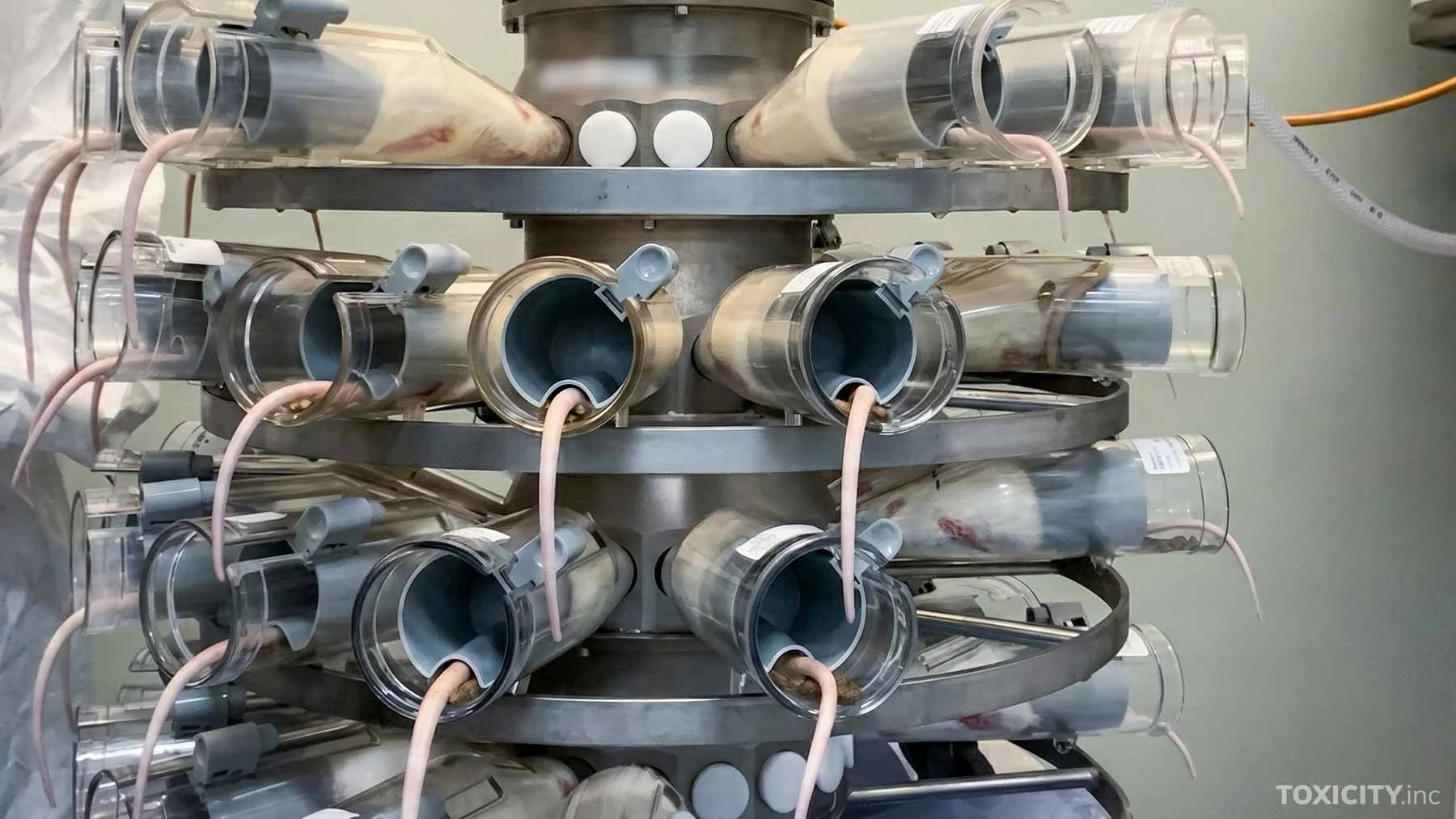
Photo from TOXICITY.inc
Conscious rats are squeezed into restraint tubes in an ‘inhalation tower’, and have tubes forced into their mouths and into their oesophagus to administer test substances.
History repeats itself
Evidence gathered by Animal Concern since we began as the the Scottish Anti-Vivisection Society (SAVS) in 1876, exposes eerily similar scenes being carried out in laboratories in the UK. Now, all these years later, the same invasive procedures and trauma-inducing practices are still being used.
TOXICITY.inc has exposed the fact that, while the UK Government may have committed to phasing out animal testing in the UK, testing is still being routinely used and animals are being repeatedly subjected to intense pain and suffering.
Animal Concern previously noted that the UK Government’s strategy to phase out animal testing does not include deadlines or laws to underpin the strategy, and so risks becoming a mere symbolic commitment that does not achieve meaningful change in practice. To find out more about the strategy, read our article here.
How to take action
A petition to the UK Government, titled ‘End testing on dogs and other animals for development of products for human use’ has already reached over 110,000 signatures, suggesting that a significant portion of the UK public is against the use of animals in testing. A debate on the petition is scheduled for this coming Monday, the 27th of April, and proceedings can be watched online.
Animal Concern urges supporters to sign and share the petition, which is still open, to show the Government how many people in the UK want to see an end to animal testing ahead of the all important debate.