Starving Sheep of St Kilda
For the past decade veterinarians Dr David Buckland and Dr Graham Charlesworth have been at the forefront of a battle to see the sheep of St Kilda protected by the Animal Welfare Act 2006.
It should be straight forward. The sheep are feral, previously domesticated, therefore should be protected under the Act. But straight forward it is not.
For reasons that may yet reveal themselves, the Scottish Government has deemed the sheep as 'wild', and therefore not their responsibility, and not to be interfered with.
The fist thing to note, is that the sheep could not have made it to the island on their own. St Kilda is a weather-beaten archipelago, off the west coast of Scotland, 40 miles from the Outer Hebrides. The cluster of islands, Hirta, Soay, Boreray and Dun, sit alone in the vast expanse of the unforgiving North Atlantic. Getting there is no easy feat, navigating the predominantly rough seas for nearly 3 hours by boat.
As a mental exercise, you can try and imagine how sheep might have arrived on St Kilda on their own....
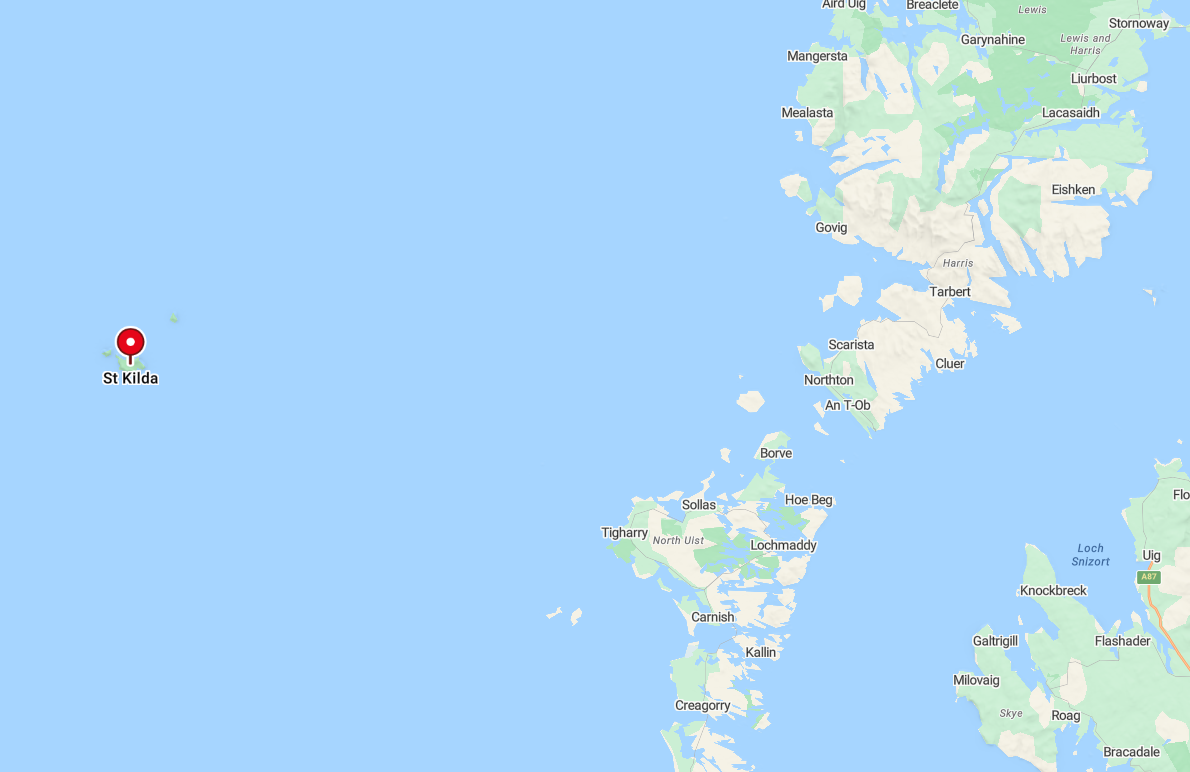
It's safe to say sheep would not have naturally made their way to St Kilda, and as such humans are responsible for them being there.
The sheep have been featured throughout historic accounts of St Kilda as being an essential aspect of the communities that lived there, using them for milk, wool, food and trade.
The last residents left St Kilda in 1930, and the sheep that were an important part of their livelihood went with them.
In 1931 the Marquees of Bute, who’d bought the islands, reintroduced 107 sheep. They were left to fend for themselves as feral sheep, surviving some of harshest winters. Unmanaged and with no predators, the sheep population grew beyond the winter carrying capacity of the island.
In 1957, St Kilda, along with the sheep, was bequeathed to the National Trust for Scotland.
Yet while St Kilda is owned by the National Trust for Scotland, the Scottish Government does not consider anyone to be responsible for the sheep, and has stated that it does not consider the sheep population on St Kilda to be covered by the protections of the 2006 Act. In correspondence on the matter they stated;
"The Scottish Government’s established position for many years has been that, for the purposes of welfare legislation, the St Kilda sheep should be regarded in the same way as an unowned and unmanaged population of wild deer or other wild animals. As such, they would be protected animals during any time that they are brought under the control of man, and are protected at other times by the Wild Mammals (Protection) Act 1996. As with other wild animals, or protected animals for which no-one is responsible, there are no positive obligations on any person to act to prevent unnecessary suffering or to ensure the welfare of the animals.”
What this means is that every year, hundreds of sheep die a painfully slow death from starvation.
We spoke with veterinary pathologist Professor Ranald Munro, who gave us this statement on what these sheep endure;
"Because of the duration of suffering experienced during fatal starvation, it is considered one of the most severe types of animal welfare issues encountered in veterinary forensic practice. With hundreds (average around 600) of adult sheep and lambs starving to death each year, the total extent of annual suffering in these sheep on St Kilda is almost incomprehensible."
We’ll spare you most of the distressing images and footage shared with us from David and Graham, but I'd ask you to consider this one image below;
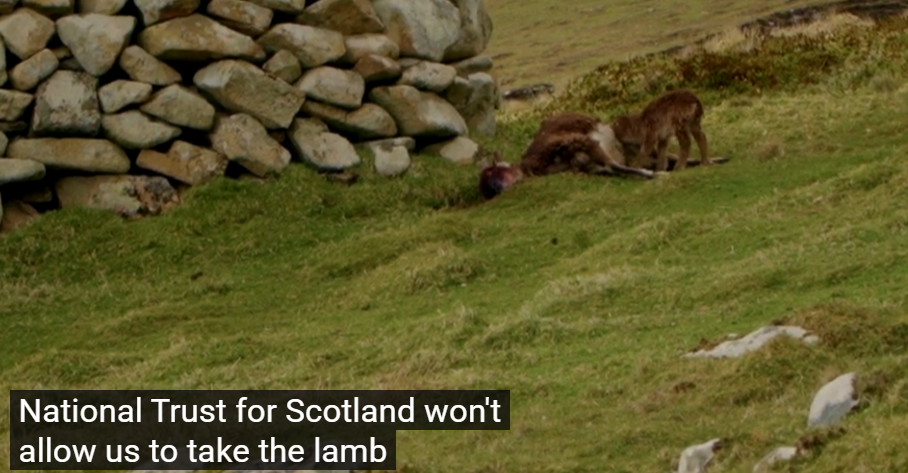
David and Graham filmed this young lamb trying to nurse from it's recently deceased mother. They desperately wanted to take it with them to spare it the same slow death by starvation. But they were not allowed. No one was allowed to interfere with the sheep, save for...
The Soay Sheep Project
It has become increasingly clear that one of the big reasons these sheep are not afforded protection is due to the Soay Sheep Project, otherwise known as a "Study in Starvation".
Researchers have been studying these sheep since the 1950s, seeing their captive state in a relatively controlled environment as an opportunity to observe population dynamics, evolution and genetics, ageing, and parasite infection. The project in its current form has been running since 1985 by the University of Edinburgh and Imperial College London in collaboration with other universities, and is well funded.
The university researchers note that 'the Soay sheep population is unusual in that it fluctuates dramatically in size with time, with populations rising markedly in some years, followed by a population crash by up to 70%. One of the objectives of the research has been to find out why this is.'
An obvious reason is overpopulation of a species that was introduced by humans to an island that has limited carrying capacity, no natural predators, and not enough food to feed the sheep through winter. Starvation to the point of death is inevitable.
To what extent this project has influenced the Scottish Government and National Trust for Scotland to dismiss the welfare of the sheep of St Kilda has yet to be established, but there is no question it plays a large role in the annual suffering these sheep endure.
What we do know is their suffering has been a project for far too long, and it is time for these sheep to be offered protection under the Animal Welfare Act 2006.
If you wish to take action, please consider reaching out to the following contacts:
The Scottish Government - to grant these sheep protection under the Animal Welfare Act 2006 : SAWC.Secretariat@gov.scot
Your MSP, contacted with your concerns: https://www.writetothem.com/
Minister of Agriculture, Jim Fairlie: MinisterforAMI@gov.scot
The National Trust for Scotland, asking them to manage the sheep on their land: stkildainfo@nts.org.uk